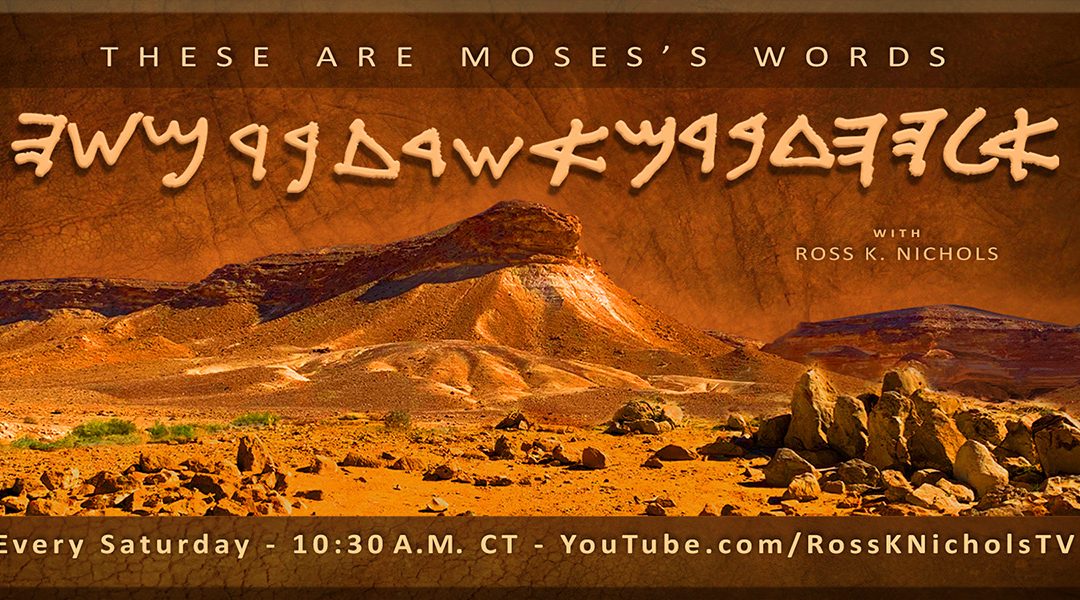
Deuteronomy begins by telling the reader that it contains the “words that Moses spoke,” but it also contains another voice – words written by another hand. This other voice/hand is that of a narrator or an editor. At times this other voice provides useful information, but the goal is to determine which words can be identified as Moses’s within the larger work. Our narrator tells us Moses wrote “haTorah hazoth – this Torah.” Can we discern what it contained? Is it possible to distinguish between the words that Moses spoke/wrote and the words of the narrator? We can, and this class lays the groundwork for our task.
In this introductory class, Deuteronomy is shown to be different than other books in the Pentateuch. It is often presented as a repetition of material already known and reported in other books “of Moses,” but a closer look reveals that this is NOT the case. Deuteronomy uses unique language and phrases, reports events with different details than the other books, and at times relates narration in the first person. Who wrote this book? When was it written? How different is Deuteronomy?
After the Balaam narratives (Numbers 22-24), another incident is recorded in the Book of Numbers. This incident is known to the Biblical writers as the “matter of Peor” and even as the “iniquity of Peor.” What took place at Peor? Our sources seem to be drawing on different accounts, at times referring to the daughters/women of Moab and at times to Midianite women. In any case, the events recorded in Numbers’ final chapters occur at the end of the forty-year wilderness journey. In this class, we survey our sources to make sense of some of the confusion and to prepare for our forthcoming study of the bible’s Book of Deuteronomy.
In the 1960s, working under the auspices of the University of Leiden, the Netherlands Organization for the Advancement of Pure Research sponsored several seasons of archaeological work. The site is 8 km east of the Jordan River and 1 km north of Jabbok at a place called Deir ‘Allah. In 1967, toward the end of the season, in a multi-chambered structure, upon a wall, an inscription was discovered. The inscription was painted in red and black ink upon plaster. Part of the inscription was intact on the wall, but archaeologists also found 119 pieces of painted plaster on the floor. This inscription at Deir ‘Allah is designated “Kanaanäische und Aramäische Inscriften (KAI) 312. It tells the story of a “seer of the gods” who has night visions from El. His name is Balaam son of Beor. Is this the same Balaam of Biblical fame?
The Hebrew Bible provides 12 references to “forty years in the wilderness.” How much of this forty-year period is reflected in the narratives of the Pentateuch? Do we have enough chronological and geographical information to determine where and when we are while reading our sources? In this teaching, based upon Torah reading Chukkat (Numbers 19-22), we look at some of the stories in an attempt to identify time and place. We also consider the case of Aaron’s death. Where did he die? When did he die? And what about Israel’s time in the wilderness? Were they wandering the entire time or were they stationary for most of the forty years?
This study, based on the reading Korah (Numbers 16-18) is focused on a story of rebellion. We look closely at the story within the Pentateuch (Numbers and Deuteronomy), and in other texts within the Tanakh for answers to problems posed by our accounts. We delve into genealogies of Levitical clans as we try to unpack the cause of strife. We also discuss some of the famous sons of the infamous Korah.
In this class, we will look at some stories from the wilderness wanderings, as they are recorded in the Books of Exodus, Numbers, and Deuteronomy. The stories I will focus on are told in at least two, but often three books. We will survey these separate accounts to observe similarities and differences between our sources. I am calling this a synoptic synopsis, by which I mean to utilize the alliteration and make the point that I intend to give a summary of similar stories viewed together.
This class has a handout. Please click here to download the PDF of the document.
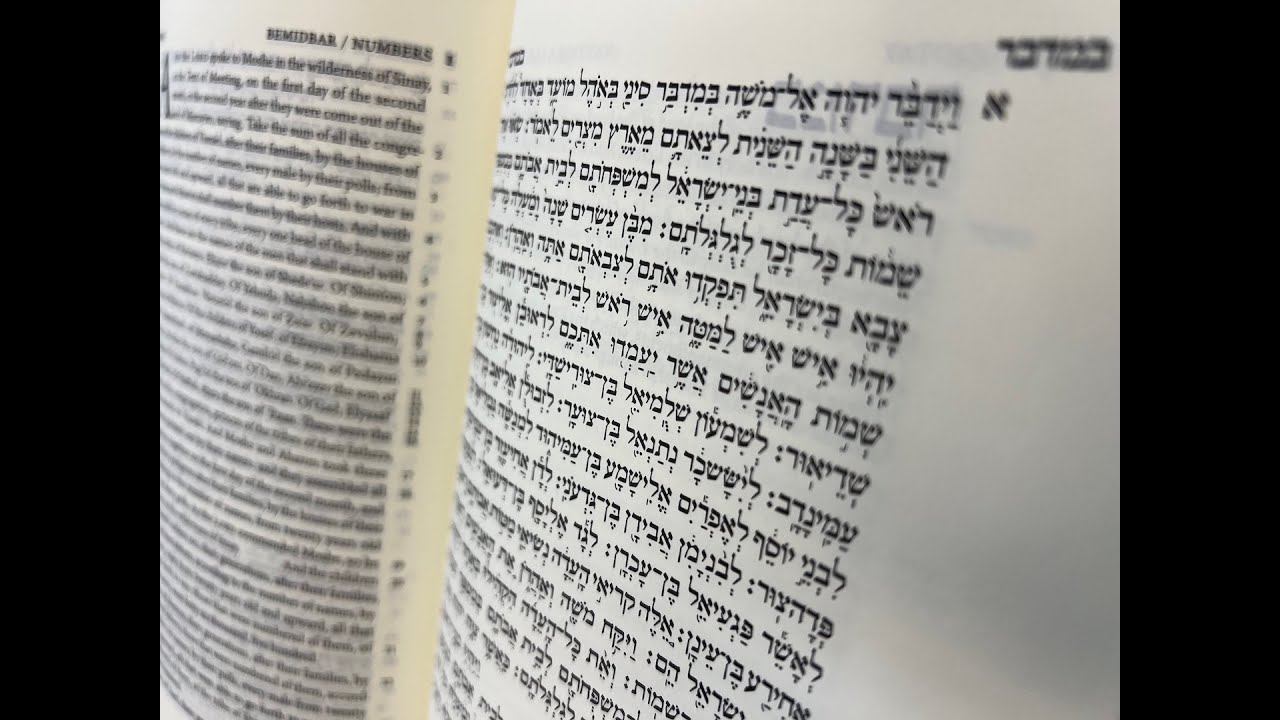
The fourth book of the Pentateuch is known to the English-speaking, non-Jewish world as the Book of Numbers. The Hebrew title for the book is BaMidbar – במדבר, which means “in the wilderness.” It begins with a rather detailed census of the children of Israel and this seems to have led to the Greek Bible’s use of Arithmoi (Numbers) as a title for the book, but the Book of Numbers is about much more than numbers. The children of Israel remained at Horeb/Sinai for approximately one year and this year is covered in the Pentateuch from Exodus 17 to Numbers 10. In the tenth chapter of Numbers, we read that Israel finally left the Mountain of God on their journey to the Promised Land. In this introductory class, a foundation is laid to track the geography and chronology of the wilderness wanderings.
Chapter 26 of the Bible’s Book of Leviticus contains what are often called the blessings and the curses. These are often studied and discussed alongside the blessings and the curses of Deuteronomy (chapters 27 and 28). Are these two accounts of the same lists? Do they contain similarities? Do they contain differences? What can we learn from a careful comparison and contrast of these two sections of Scripture? According to these texts, some actions produce good results and some produce bad results. How can we incline ourselves to the favorable results according to the Bible? Answers to these questions and more are covered in this teaching.
In 622 B.C.E., the High Priest Hilkiah reported a great discovery – the original scroll of the Torah of Moses! The details of that discovery are recorded in the Hebrew Bible (2 Kings 22-23 and 2 Chronicles 34-35). A careful examination of these texts of the discovered scroll and the subsequent reform of King Josiah led scholars to propose that the scroll written by Moses resembled a form of the present book of Deuteronomy. What did Moses write? Can we, with any degree of certainty, discern the authentic form of Moses’ Torah? What happened to the scroll? Later scholars would call the story of Hilkiah’s discovery a “pious fraud,” but was it?
In 1865, Bedouin tribesmen discovered sixteen leather manuscript strips east of the Jordan, high above the Wadi Mujib (biblical Arnon), in a cave, wrapped in linen, appearing to be covered in pitch, written in ancient Hebrew. It soon became apparent that this scroll resembled a form of the Book of Deuteronomy but with noteworthy variations. It was ultimately declared a forgery, but was it? A careful study of the contents of THIS scroll suggests that the experts were wrong. Might it have been a copy of the original Torah of Moses?
Leviticus Chapter twenty-three contains a priestly listing of the “Festivals of YHVH.” This teaching highlights various terms used by the authors of the Pentateuch to describe these holy days. What is a Moed, Chag, Shabbaton? These questions and more are covered in this class. We also compare and contrast three passages that describe the three “pilgrim festivals.”
Leviticus 19-20, which comprises what scholars refer to as the Holiness Code contains several laws that are connected to laws from the Decalogue. Several other passages also relate laws that bear a resemblance to those we find in the Decalogue. These Decalogue texts form a sort of Decalogue constellation. In this video, I work through some of these with guest Jono Vandor.