In Class Eight we cover material associated with annual reading Va-Yetzay (Genesis 28:10-35:29). The material presented in this class concerns Jacob’s time away from the Promised Land – 20 years that he spent in the ancestral homeland of Patriarchs and Matriarchs. Jacob flees Esau at the beginning of our story and Laban at the end. Don’t miss The Flights of Jacob.
In our journey through the texts of the Pentateuch according to the annual cycle of readings we are moving into a new story, designated Eleh Toledot Isaac by the ancient compiler. This story begins in Genesis 25:19 when Isaac is forty years old and ends in Genesis 35:29 when Isaac dies. It is clear that Rebekah, and not Isaac is the leading role in the unfolding plan. In this class, we take a close look at the birth of twin sons to Isaac and Rebekah – Esau and Jacob. We share what we know of Isaac, but following the lead of the author of these stories, our main focus is on Rebekah who acted on a word she heard from God to ensure that nothing interfered with the fulfillment of the divine decree.
This is the third of three classes on the life of Abraham drawing from the material, assembled in an ancient work called, Eleh Toledoth Terach. This teaching focuses on the stories contained in Parashah Chayei Sarah (the life of Sarah – Genesis 23:1-25:18). By the close of this week’s section, the deaths of Sarah, Abraham, and Ishmael are reported. The class takes a close look at the main stories contained in Chayei Sarah (the death of Sarah, Abraham’s purchase of land from the “Hittites,” and acquiring a woman for Isaac). Are there indications in the text that the Akedah (the binding of Isaac) caused a strained relationship between Abraham, Sarah, and Isaac? Who are the Hittites? Why does the Pentateuch report Abraham’s death out of chronological order?
In this class, we cover material primarily from parashah reading Va-Yera (Genesis 18-22). The life of Abraham lasted 175 years and is covered in fourteen chapters of the Book of Genesis and yet five chapters (17-21) record events that took place in a single appointed year. A close look at the texts reveals that the compiler of the book made use of various ancient sources. In this teaching, we examine the clues to discover that several of the stories we know well are at times represented within the book in more than one version – versions that provide different details.
Within the Bible’s Book of Genesis are traces of an ancient structure. There are ten sections, unnoticed by most, each beginning with the Hebrew phrase אלה תולדת / Eleh Toledoth, typically translated as “these are the generations.” One of these sections runs from Genesis 11:27 through Genesis 25:11. This section is called, according to its heading, Eleh Toledoth Terach and it tells the story of Terach’s son Avram/Avraham. Following the Annual cycle of Pentateuch Readings, this is the first of a three-part series on the Life of Abraham.
The second parashah in the annual cycle of Pentateuchal readings is called Noah. This teaching reveals an underlying structure of the Bible’s Book of Genesis whereby the stories that we know were originally arranged by an ancient editor or redactor. This ancient structure organizes several separate stories into a flowing narrative. In this class, we demonstrate this process by showing how distinct source texts relating to the story of Noah were woven together into the epic that we know and love. The ancient stories of the Biblical Noah, the Sumerian Ziusudra, the Akkadian Utnapishtim, all seem to point to the historicity of a man saved from a deluge. What can we learn from a new look at Noah as his story is told in the Pentateuch?
In our new series (Tishri 5782-Tishri 5783) we will work through the Five Books (The Pentateuch). Dr. James Tabor shares some insights from the first reading in the Annual Reading Cycle (Bereshit – Genesis 1:1-6:8). Don’t miss, Dr. Tabor’s class on Pentateuch Reading Bereshit.
In our new series we will work through the Five Books (The Pentateuch). In this introductory class presented during the Festival of Booths, we learn that the institution of a public reading of “the Teaching” is attributed to Moses (Deuteronomy 31:9-13). We trace the practice, and highlight two different systems for working through the material contained in the Pentateuch. Don’t miss, The Pentateuch: A New Look – Introduction – Class One.
United Israel World Union, a religious educational organization founded in 1944, is pleased to announce a new teaching series for the Jewish calendar year 5782. The entire year will be dedicated to a careful study of the words of the Bible’s first five books based upon an honest and objective new look at the Pentateuch.
The material for the weekly lessons will be arranged according to the annual cycle of readings.[1] Classes will be streamed live each Saturday morning at 10:30 a.m. CT on our Facebook page and our YouTube channel. Entries for each session will be posted on our website following the class and will include links to audio and video files as well as written transcripts of the week’s teaching. Audio files of the classes will also be available on Apple Podcasts.
Weekly presentations will demonstrate the beauty and artistry of the received texts of the Pentateuch, highlighting the core teachings conveyed within, while acknowledging the contributions and advances of biblical scholarship.
Participants are invited to discuss the content of the classes on our United Israel Facebook group page and thereby respectfully interact with others about the material covered in each class, asking, and answering questions that result from the studies.
Since we will be covering material from the Biblical texts, all that is required is a Bible. We will be recommending various books and articles throughout the year-long course, but these are optional. As a start we highly recommend Hertz’s commentary.[2] This work by the late, Chief Rabbi of the British Empire is a classic work and is widely available. It is available new from Amazon for $39.95, but they also list more than 80 used copies for as little as $6.38. We also recommend Dr. James Tabor’s, The Book of Genesis, which is also available on Amazon.[3]
We look forward to this new and informative series and hope that all our friends and supporters will participate. We encourage you to:
For those who wish to hear the weekly Pentateuch portions read in Hebrew, please check out, or join the Hebrew Torah Reading Team.
Will you join us for – The Pentateuch – A New Look at the Five Books? We hope so. We also hope that you will help us share this announcement far and wide. On Saturday, 25 September 2021, there will be an introductory class for the series, and on Saturday, 2 October 2021, Dr. James Tabor will teach a class based upon the first reading of the annual cycle. You will not want to miss this series!
“Read the Bible as though it were something entirely unfamiliar, as though it had not been set before you ready – made … Face the book with a new attitude as something new … Let whatever may happen occur between yourself and it. You do not know which of its sayings and images will overwhelm and mold you … But hold yourself open. Do not believe anything a priori; do not disbelieve anything a priori. Read aloud the words written in the book in front of you; hear the word you utter and let it reach you.”[4]
____________________________________________
[1] United Israel World Union provides its supporters with a Jewish calendar that includes the readings of the annual cycle for each week. To request a copy, email uiwuvp@gmail.com. Write “Calendar Request” in the subject line, and include a physical mailing address in the body of the email.
According to a plain reading of the Bible’s Book of Exodus, the name YHVH was unknown until it was revealed to Moses (Exodus 6:2-3). From the story of the encounter at the bush (Exodus 3) throughout the remainder of the Bible, God is known by this memorial name. The Book of Exodus makes it clear that through the events of the exodus, YHVH made a name for Himself.
In this class we continue our Honest to Moses series and our study of the historicity of the biblical Moses from our Pentateuchal sources. What is God’s first name? According to Exodus 3 and Exodus 6, THE Name of God (יהוה) was introduced to Moses but was not known prior. Do the texts of the Pentateuch support this? And if so, what was the name prior to the time of Moses?
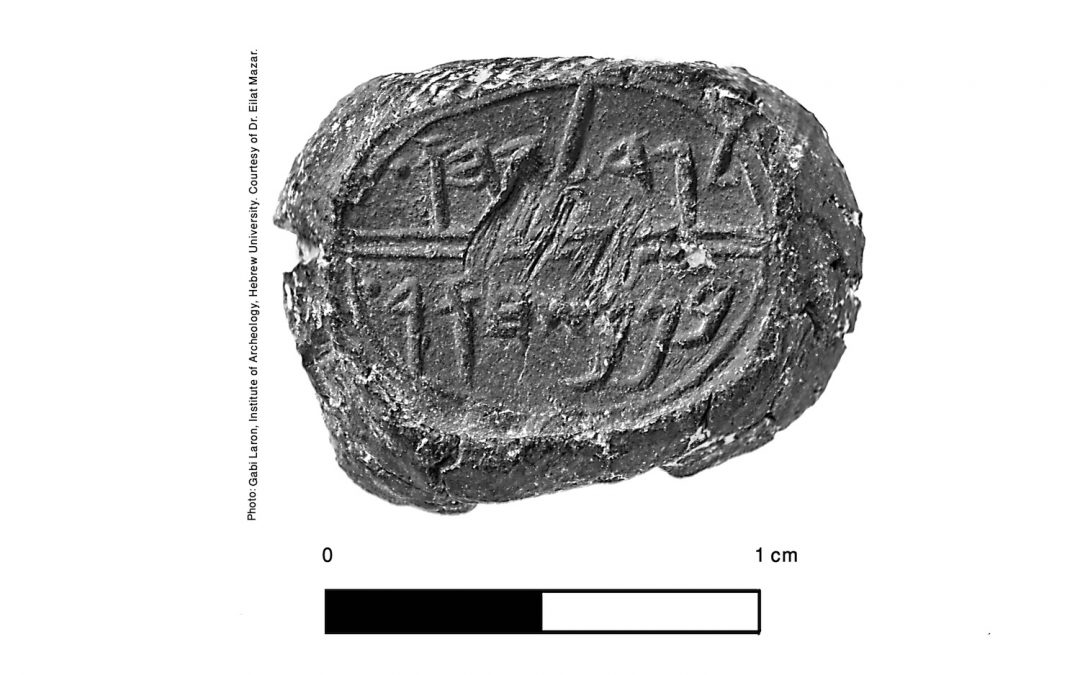
Bulla inscribed, Gedaliah ben Pashur – Courtesy of Dr. Eilat Mazar Discovered at Ir David / Announced 2008
On the third day of the seventh biblical month, the Jewish people observe a day of fasting. The observance is known as the Fast of Gedaliah. Who was Gedaliah, and why is his name associated with a day of fasting down to this day?
In the aftermath of the destruction of the First Temple by the Babylonians in 586 BCE, a few of the poorest of the land were left to be vinedressers and plowmen (II Kings 25:12; Jeremiah 39:10). The majority of the people were taken captive, their cities were left in shambles and their hope was gone. The King of Babylon appointed Gedaliah as governor over the land and the small remnant of Judeans. The Governor tried to reassure his people that all would be well if they would but serve the King of Babylon and live in the land. He encouraged them to dwell in the cities and go about their lives without fear. He told them to gather wine and summer fruits and oil, and store them in vessels and to live without fear. Judeans began to return and inhabit the cities left vacant in the wake of Babylonian aggression. Gedaliah made his home in Mizpah (Jeremiah 40:7-12).
During these dark days, Nebuchadnezzar gave special instruction concerning the prophet Jeremiah. He ordered Nebuzaradan, the captain of the guard to, “take him, look after him well, and do him no harm, but deal with him as he tells you.” Nebuzaradan released Jeremiah from his chains and offered him the choice of going to Babylon or returning to his own land to dwell with the appointed Governor of the land among the people. Jeremiah chose to live among his people in the land, in the home of the Governor (Jeremiah 39:11-14, 40:1-6). As it turns out, the two most likely knew each other quite well. Gedaliah’s father, Ahikam, had come to Jeremiah’s aid when he was accused of prophesying against the Temple and the city, pronouncing their ruin (Jeremiah 26:24). Gedaliah’s grandfather, Ahikam’s father, also played into the story of Jeremiah. His name was Shaphan. It was Shaphan, who in the days of Josiah was part of an incredible discovery story. The High Priest Hilkiah discovered a scroll of the Torah in the Temple and he told Shaphan about it. Shaphan reported the discovery to King Josiah and read the scroll to him. King Josiah sent Shaphan, his son Ahikam, the priest Hilkiah (Jeremiah’s father? cf. Jeremiah 1:1), and two others to go inquire of YHVH about the words of the scroll. They all went together to a prophetess by the name of Huldah who told them of all that was to come (II Kings 22:14-20).
So why do we fast for Gedaliah? What happened to the Governor whose family plays so prominent a role in the life of Jeremiah? He was assassinated by a member of the royal family (Jeremiah 41:1-2)! Gedaliah had been warned of the plot but refused to believe it, but the warning was true. At a meal in Mizpah, eleven men rose up and struck down the Governor and those that were with him (II Kings 25:25; Jeremiah 40:13-41:3). The murder of Gedaliah seemed to mark the end of the Judean commonwealth. According to the biblical record, the murder of Gedaliah occurred in the seventh month (II Kings 25:25, Jeremiah 41:1, 2) and the people of Judah held a fast to commemorate his death. It is kept on the third day of the seventh month, and the stated purpose is “to establish that the death of the righteous is likened to the burning of the House of our God” (Talmud, Rosh HaShanah 18b). According to tradition, this is believed to be the fast to which Zechariah makes reference (Zechariah 7:5; 8:19). The fast of the seventh month is known as the Fast of Gedaliah. It has been kept since the days of Zechariah it would seem!
So on the third day of the seventh month, I am thinking of Gedaliah. He was a good man who had high hopes and best wishes for the restoration of his people and their land in a very dark period of history. He didn’t want to believe that one of his own people would seek his harm. I sit here today as I write this and wonder what conversations took place between Gedaliah and the prophet Jeremiah in his home. Gedaliah’s father had once defended and saved the life of Jeremiah (Jeremiah 26:24). His father and his grandfather had been part of a discovery that led to one of the greatest revivals in all of biblical history. Should we not on this day honor Gedaliah? I say we should. One day, the fast of the seventh month will be among the seasons of joy and gladness and cheerful feasts (Zechariah 8:19). Therefore love truth and peace. Gedaliah certainly did.
NOTE: The Bulla in the photo associated with this article contains the name Gedaliah. This Gedaliah lived at the time of the events described in this article, but Gedaliah ben Pashur was an opponent of Jeremiah. See Jeremiah 38:1.