This week’s episode in our Isaiah series uncovers a remarkable, yet often overlooked, tapestry of intertwined prophetic lives. In the shadow of the reigns of Uzziah, Yotham, Ahaz, and Hezekiah, four prophets—Hosea, Isaiah, Amos, and Micah—proclaimed their visions. But did you know that amidst the turbulence, at least two of these prophets became fathers? Their children, bearing names that foretold imminent events, became living prophecies. Isaiah described them as “for signs and wonders.” The stories behind these children and their mothers—one a prophetess, the other a prostitute—paint a captivating narrative of faith, prophecy, and destiny.
Step into the world of Isaiah as we delve into the third episode of our ongoing series on The Book of Isaiah, titled “The Eyes of Isaiah.” This class illuminates the importance of context in understanding Isaiah’s prophecies, encouraging us to view the text through the lens of the events unfolding in Isaiah’s lifetime.
In this episode, we will traverse through the Book of Isaiah, focusing on events that transpired during the reign of Jotham. Having established in a previous session that Isaiah’s calling was in the year King Uzziah died, we will now turn our attention to the subsequent monarchs mentioned in the opening verse of Isaiah, analyzing the relevant texts chronologically and surveying the kings in sequence.
A key focus will be Isaiah 7, set during the time of Ahaz. Unravel the historical backdrop of this chapter, question the identity of the child in Isaiah 7:14, and delve into the significance of the pregnancy and birth prophesied. Moreover, we will juxtapose this with the words of another contemporary prophet concerning the birth of a child, drawing connections and contrasts.
Embark on this journey as we dissect the layers of history, prophecy, and intrigue interwoven throughout Isaiah’s narrative. “The Eyes of Isaiah” promises to deepen your understanding of this monumental book and unveil the richness of its historical and prophetic tapestry. Join us as we unravel the mysteries of the past through the eyes of Isaiah.
In 2 Kings Chapter 8, Gehazi, the servant of the man of God, was speaking to the king about the miracles of Elisha. As Gehazi spoke of the miracle of restoring life to the son of a woman, this same woman walked into their company. The woman had left the area to go to the land of the Philistines for seven years due to a famine. She had now just returned and was requesting her property back. “And Gehazi said, my lord, O king, this is the woman, and this is her son, whom Elisha restored to life.” And the king restored to her the house and land she had left seven years ago. Many people think this may have been a coincidence. But I think not. It was a series of incidents ordained by the Creator for a specific purpose, a series of events that happened to me that I believe were orchestrated by G-d. This is the story of how I ended up with an authentic Torah Scroll.
What started as a series of dreams that I had, I now see it was a set of events that could only be orchestrated by HaShem. The first dream was in the summer of 1989 of me looking in the distance and seeing a snow-covered mountain and a place of worship, not a church but a group of people. I remember saying to myself, how can I be seeing a mountain, much less snow, when I live in Mississippi, and it was 90 degrees almost every day.? But within a few days, I would be asked to go on a trip with a friend of mine to Montana and Idaho. I took some vacation time and figured, what the heck, I could see that part of the country and help my friend drive. My friend was Clyde Lott and he was looking for red Angus cattle for Israel. I wasn’t too familiar with why Israel would even want a red heifer until I looked in the Bible and studied Numbers 19. Come to find out, Clyde had communicated with Rabbi Chaim Richman and Rav Ariel from the Temple Institute in Jerusalem to discuss their interest in a red heifer.
It was when we stopped in Thomasville, MT, for some lunch that my déjà vu moment happened. After walking out of a “what not” store that was used on weekends for Bible services, we were crossing the street, and I turned and saw a snow-covered mountain in the distance, and then it hit me. This was the place in my dream. I remember I was literally shaking as I looked, realizing that this place and time were somehow important. But my question was, how?
About this time, I heard of a person in Athens, TN, named David Davis, who was a leader of Emmanuel, a Noahide[1]group. He had a rabbi coming to a conference who was interested in a red heifer. So, I took off again and went to this conference. There, I met, in person for the first time, David Davis, Dr. James Tabor, Ross Nichols, and Rabbi Katz. This was in November 1990, I believe. I remember listening to the speakers and how their words affected me and my belief system. My beliefs were being challenged, and my insides were in turmoil. I had questions with no answers, and on top of that, David Davis said, “the Bible had a bunch of answers, but we don’t know the questions.” I had no one to help me within my church group because the majority of the people who read the Bible did not study it but just took the word of their leader without questioning him. I started driving 8 hours one way to Athens, TN, to attend Shabbat services with these Noahide folks and often get tapes from the different speakers. The more I learned, the more I thirsted for answers, but I was not getting them from this group. It was so frustrating.
Then, in March 1991, I went on my first trip to Israel, not knowing how other events happening at approximately this same time would start a chain of events that would greatly modify my future. While in Israel, I went to the Temple Institute and saw several of the furnishings, instruments, and vessels that will be used after the Temple is rebuilt. I met Rabbi Chaim Richman and Rav Ariel while there, but my meeting with Rav Ariel was literally electrifying. After ascending some concrete steps at the Institute, Rav Ariel met me with a salutation of Shalom and a handshake at the top of the stairs. When his hand touched mine, I saw and felt electricity jump from his hand to mine. Even though I was a Jesus-name Pentecostal preacher at that time and thought the Jews were wrong in their religion, I knew this man was a Holy Man, and he had a special anointing of G-d. After I was over my initial shock, I remember looking around to see if there was any other reason for the electrical shock. There was no carpet or other material that I could see that could have caused a static electrical charge. The revelation of him being a “Man of G-d” shook my belief system. I asked myself, did I really have all the truth? Little did I know that my faith in exactly what was the exact truth was cracked beyond repair.
After returning to the United States and going to churches, teaching about the red heifer, and showing pictures of the Temple furnishings and implements, I started asking myself questions I could not answer. I had to learn to use other sources to find the meanings of words in the Bible. I had assumed until now that the KJV was correct and never questioned it. I asked my pastor at that time if there were errors in the Bible, and he said a few. Then, after questioning an evangelist from the Middle East about the validity of the translation, he told me that it was maybe 65-75% correct. Boy, did that upset me. If that much was wrong, then what exactly was right? You must understand I worked as an OSHA consultant and was taught to read the regulations for exactly what they said and meant. So, I started researching the Bible, not just reading the words and taking another person’s word for what it meant. With the help of computer programs and Bible reference books, I could utilize my time better when looking up Hebrew or Greek translations. I would look up words, phrases, or combinations expeditiously. I started amassing a number of books in my formerly meager library with commentaries and opinions of rabbis, scholars, and other learned authors. I noticed many of the wise people that I knew personally had libraries of information. I, too, wanted information, books, papers, etc., to find more answers. My soul ached for truth. The deeper I looked for answers, the more I was challenged in my belief system. I could see I would soon have to decide, stay with Jesus or let him go to his rightful place.
Unknown to me, while all of this was taking place, Rabbi Katz from Atlanta was having some things in his life taking a turn and needed some financial assistance. Rabbi Katz often taught at Emmanuel (the Noahide group), driving several miles each visit. At this time, this Noahide congregation was saving money so they could purchase a Torah Scroll and had already collected a large portion of the price. Anyone who has ever investigated the price of a handwritten Kosher Torah Scroll knows it is costly. After learning of Rabbi Katz’s predicament, the congregation decided to give their savings to Rabbi Katz. I am sure it was a major blessing for the Rabbi and his family.
David Davis was getting national attention and was traveling a lot to speak for different organizations. At that time, most churches had not heard of the Noahides or their belief system, even though some of its beliefs are alluded to in the book of Acts. David Davis went to England and South Africa in his international travels. While in South Africa, he met Rabbi Ivan Lerner, the leader of Claremont Wynberg Hebrew Congregation. Rabbi Lerner took David on tours of the area, and they became good friends. Come to find out Rabbi Lerner of South Africa knew Rabbi Katz. Also, Rabbi Katz had relatives in South Africa.
Sometime in or before the meeting in South Africa with David Davis, Rabbi Lerner had heard of the act of charity by the Noahide congregation toward Rabbi Katz. Rabbi Lerner told his congregation about the charity and the idea of helping the Noahides get a Torah Scroll. Based upon my conversations with Rabbi Lerner and David Davis, a member of the congregation had brought a Torah Scroll, written in 1927, from his home country Lithuania to South Africa. In 1998, the South African congregation voted to give the scroll to David Davis. I remember being at a Noahide conference sometime in the early 2000s when David brought out the scroll and told of the charity of the congregation in South Africa. I recall, thinking to myself how great it would be to have a Torah Scroll.
In the meantime, I was looking for a group that I could study with here in Mississippi but there was none close except for a Jewish reformed group and a Messianic group. I didn’t want to convert so I decided to try the Messianic group. I went there a couple of times but their beliefs in Jesus were totally opposite of mine now. Luckily, if you can call it that, I could call David Davis and a friend I met in Vicksburg, MS, Chris Jackson and we would discuss Bible questions and possible answers for hours on end.
Later, after hearing about United Israel World Union (UIWU), I decided maybe they can help me find answers, or if nothing else I could have fellowship with like believers. After attending several conferences and gatherings, I found a home! The people were super friendly and open-minded and thought outside the box with their hearts and brains. Even though I was still a card-carrying Pentecostal preacher, they let me into their group with love and respect.
But I knew in my heart it was time for me to make a change. I had already become ordained as a teacher with the Noahide group but I wanted to become a member of UIWU who could perform marriages, funerals, and other ministerial duties. I did become a member in the early 2000’s. Then on December 19, 2003, Timothy Thompson, Ross Nichols, and I were ordained together as ministers in the UIWU.
Sometime in 2005, David Davis offered me most of his vast library knowing of my desire to learn and study. I was honored to get his books and continue on my journey. In total, there were over 500 books. I had copies of some of the books, but most were new to me. I had bookshelves built to help organize the library and gave away my extra copies to someone and they ended up in a Houston, TX, synagogue. I know this because Betty Givens informed me when she found my name in some of the books in her synagogue’s library.
I continued on my journey of seeking and finding truth and have come into contact with so many great people who are on the same journey, but at different places. After talking with these awesome people, I find they have had similar experiences concerning their paths and associated time frames. I found that we knew some of the same rabbis and other spiritual leaders, had visited the same foreign lands, and had similar dreams or “chance” meetings with people who helped stimulate their faith at just the “right” times.
Because of the knowledge of many in the UIWU group and the Noahide movement, I started thinking more outside the box. When looking at the same box from different directions, I started seeing things I would never have thought of in my past life.
I learned that people who did not think as I do on religion or other associated topics could still have a desire to serve G-d. I was just like many of them in my past. I often ask, G-d why me? Why did you show me this path? Why cannot others see this truth? But as I look back 20 years ago, I would not have accepted the truth I see now then either.
Then, out of the blue in 2022, David Davis contacted me regarding the Torah Scroll that he had and wanted to know if I wanted it. Of course, I wanted it! However, I was concerned about the maintenance and utilization of the scroll. I thought about it for a while until David called me and said, “You have my library; you should have the scroll also.” So we made plans for me to drive a few hundred miles to pick it up. I have since discussed with a rabbi the proper care of the scroll and I am getting someone to build me an ark to store and display the scroll. The scroll’s journey has ended, after 25 years, in this small town in central Mississippi. Who but HaShem could have orchestrated such events for this to come to pass?
Your path like mine is a journey of events. As we migrate from one position to the next, we must lay a correct foundation to build upon. Your foundation will support more understanding and revelations. I do believe people cannot handle all the truth at one time because of the baggage of our past religious upbringing. Past baggage has weighed us down and guided our belief system in another direction. But as one rebuilds their foundation in Torah, they will have things that happen to them that only God has ordained.
Your journey has had many events that are orchestrated by the Creator. Your life has been enhanced by the steps you took in the direction G-d has directed. Even when you deviated from your path, G-d had another event in your future to help guide you back, if you so desire. One’s obedience to G-d is so important. Listening to that still small voice will guide you in the direction you need to go. Learning to listen and distinguish His voice from others and then acting upon what the voice asks you to do is the key to peace in your soul.
[1]Noahide Laws, also called Noachian Laws, a Jewish Talmudic designation for seven biblical laws given to Adam and to Noah before the revelation to Moses on Mt. Sinai and consequently binding on all mankind.
How should Christians regard Moses? Are his words beneficial for the followers of Jesus? What of his laws? Are they contrary to faith? Have they been done away with?
On August 27, 1525, 498 years ago today, a now famous Christian preacher delivered a sermon intended to answer the question once and for all. The sermon was entitled, How Christians Should Regard Moses. For several years, on the anniversary of this sermon, I have published this article with slight edits and am doing so again this year.
The Sermon
The preacher set out to show that God gave only two public sermons from heaven. The first is recorded in Exodus chapters 19 and 20, and the second in chapter two of the book of Acts. Though not mentioned by the preacher of this sermon, both events are reported to have taken place during the third month of the Hebrew year, 50 days after the Hebrew Festival of Passover, at the Feast of Shavuoth or Pentecost.
The author of the sermon was not interested, however, in finding a correlation between the two events but rather in pointing out the distinctions between the sermons designated by him as the Law and the Gospel. His sermon was intended to declare once and for all that “these two sermons are not the same.” Note the language of the sermon on this very point from the text of the preacher’s sermon.
“Now the first sermon, and doctrine, is the law of God. The second is the Gospel. These two sermons are not the same. Therefore we must have a good grasp of the matter in order to know how to differentiate between them. We must know what the Law is, and what the gospel is. The Law commands and requires us to do certain things. The Law is thus directed solely to our behavior and consists in making requirements. For God speaks through the Law, saying, ‘Do this, avoid that, this is what I expect of you.’ The Gospel, however, does not preach what we are to do or to avoid. It sets up no requirements but reverses the approach of the Law, does the very opposite and says, ‘this is what God has done for you; he has let his Son be made of flesh for you, has let him be put to death for your sake.’ So, then, there are two kinds of doctrine and two kinds of works, those of God and those of men. Just as we and God are separated from one another. So also these two doctrines are widely separated from one another. For the gospel teaches exclusively what has been given us by God and not – as in the case of the Law – what we are to do and give to God.”
The preacher continued his sermon by comparing the two sermons to two kingdoms – the temporal and the Spiritual – where the temporal equates to the Law and the Spiritual to the gospel.
He then identified yet another kingdom that resides between the temporal and the spiritual – one that is half and half, as it were. According to the preacher, it is constituted by the Jews, with commandments and outward ceremonies that prescribe their conduct toward God and men.
From this platform, he went on to attempt to show that “here the Law of Moses has its place.” While admitting some good within this middle kingdom, he clearly showed that the things that apply to Gentiles are only those that are “written by nature into their hearts.” He preached this on behalf of a group he referred to as enthusiasts. This group “reads Moses (the Law), extols him, and brings up the way he ruled the people with commandments. They try to be clever and think they know something more than is presented in the gospel, so they minimize faith, contrive something new, and boastfully claim that it comes from the Old Testament. They desire to govern people according to the letter of the Law of Moses as if no one had ever read it before.”
He saw no way to reconcile the two sermons. He placed them against one another using very strong language. Notice the following quote from his sermon.
“We would rather not preach again for the rest of our life than to let Moses return and to let Christ be torn out of our hearts. We will not have Moses as ruler or Lawgiver any longer. Indeed, God himself will not have it either.”
He further told those present at his sermon to tell those who would preach Moses to simply respond with the statement that “Moses has nothing to do with us.”
The preacher went on to state that the Sabbath was abolished, and in fact, he said that “not one little period in Moses pertains to us.”
Finally, he sought to set the record straight and informed the laity of why they should even retain Moses and not, as he put it, “sweep him under the rug.” He identified three things “to notice in Moses.”
Certain commandments are good for Christians. Not, said he, because Moses gave them, but “because they have been implanted in me by nature” and “Moses agrees exactly with nature.” He went on to share which commandments he gladly and willingly accepted.
He said that he also accepted those things in Moses that he called “the promises and pledges of God about Christ” – promises that, as he put it, “sustain faith.”
The third thing to be seen in Moses as worth keeping around are “beautiful examples of faith, of love and the cross, as shown in the fathers, Adam, Abel, Noah, Abraham, Isaac, Jacob, Moses, and all the rest.”
The sermon discussed above was delivered on this date (August 27, 1525), 498 years ago, by Martin Luther as part of a series of seventy-seven sermons on Exodus preached between October 2, 1524, and February 2, 1527.
I could not let the day pass without announcing that I stand with the historical Jesus against Martin Luther on the anniversary of his sermon.
This session delves into the formative moments of Isaiah’s prophetic journey, illuminating the divine calling that set the course for his profound contributions to biblical history.
A Divine Summons: What can the biblical narrative reveal about the nature and nuances of Isaiah’s calling? How does his experience align with, or diverge from, the callings of other revered prophets?
A Historical Tapestry: Unearth the socio-political landscape during the time of Isaiah’s initial call. Dive deep into the context that breathed urgency and purpose into his mission.
A Mission Outlined: Isaiah’s calling wasn’t just personal; it was deeply intertwined with the destiny of a nation and its relationship with God. Explore the overarching mission handed to Isaiah and the pivotal role he played in guiding a nation’s spiritual journey.
Join us as we unravel these questions and more, offering a comprehensive look into the early chapters of a prophet’s life that would forever shape the theological and historical landscapes of the biblical world.
Join us as we embark on an enlightening journey through the Book of Isaiah, delving deep into the life and times of one of the most influential prophets in biblical history.
Isaiah’s words have resonated through the ages. His profound prophecies, remarkably preserved at Qumran and frequently echoed in the New Testament, underscore his unparalleled significance in Jewish and Christian traditions.
But who was Isaiah, the man behind these powerful words?
Our inaugural session, “Introducing Isaiah,” will aim to pull back the curtain on the historical Isaiah. Drawing from scriptural accounts, we’ll explore the world Isaiah lived in, the pivotal events that shaped his prophecies, and what we can discern about his family and personal life.
The Book of Isaiah is not just a collection of prophecies but also a testament to a prophet’s life lived in turbulent times, a reflection of his profound relationship with God, and a testament to his undying hope for his people. Come and immerse yourself in the world of Isaiah, understanding the man, the legend, and the legacy.
It has long been recognized that the Book of Deuteronomy holds a distinct place within the Pentateuch, utilizing language that sets it apart. In this insightful class titled ‘The Fourever Faith,’ we uncover a fascinating pattern involving four specific Hebrew words (שמע למד שמר עשה: Listen, Learn, Guard, and Do).
While these words are not unique to Deuteronomy, what sets them apart is their frequency in this book and the intriguing fact that they often appear together—sometimes two, three, or even all four in the same or consecutive verses. But most remarkably, when they appear together in Deuteronomy, they always do so in the same order, without exception.
This consistent sequence, exclusive to Deuteronomy, uncovers a hidden guide that, according to the book’s author, must be adhered to by those who aspire to live their lives in accordance with God’s instructions. Listen, Learn, Guard, and Do are more than mere terms; they symbolize sequential steps that reflect a profound spiritual journey. Join us as we unravel this mysterious pattern in ‘The Fourever Faith,’ revealing an ancient pathway designed for all who seek to walk in divine alignment.
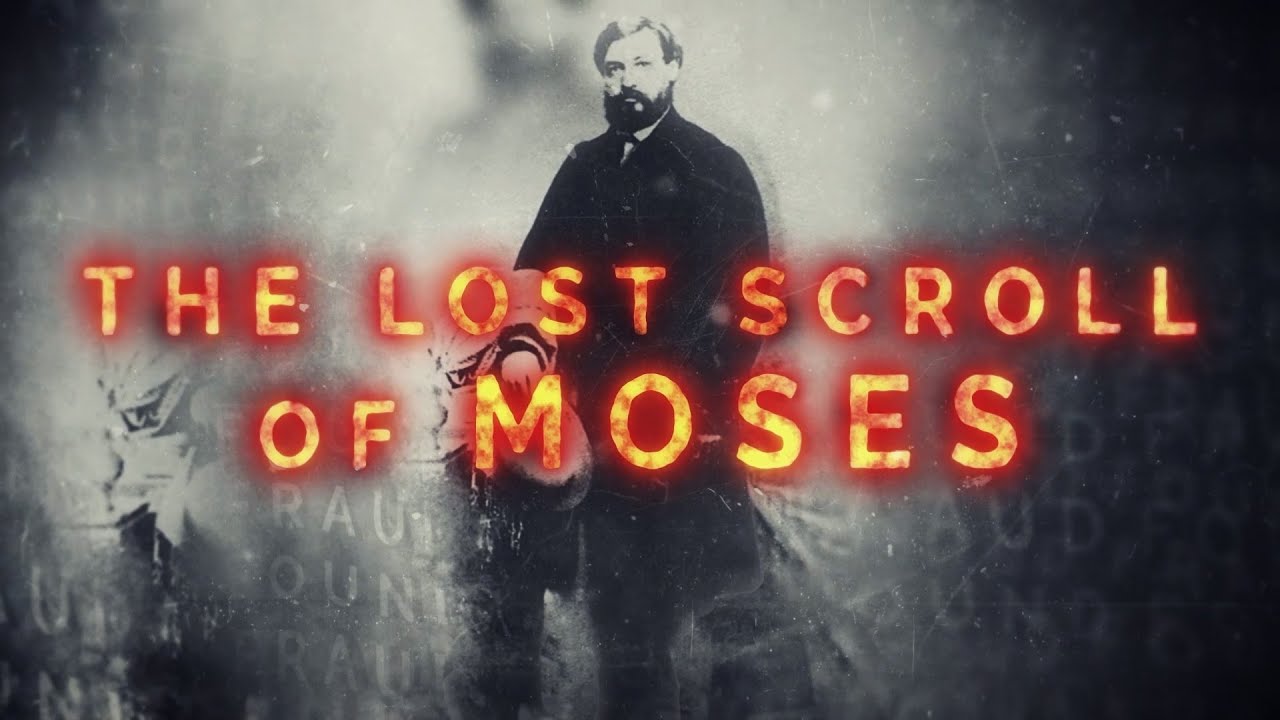
Unearth an ancient mystery in “The LOST Scroll of Moses.” Deuteronomy informs us that Moses wrote a scroll and bequeathed it to the Levites and the elders of Israel.
Tradition claims this Moses scroll is the Pentateuch, but clues within the Pentateuch point elsewhere. The Bible describes the enigmatic scroll as lost, then found in 622 BCE, triggering debates among experts – could it be a form of Deuteronomy? Or was the “discovered scroll,” as some scholars suggest, a mere pious fraud designed to support the reforms of Josiah’s era? This class seeks to solve this age-old enigma.
Join us as we piece together the clues embedded within the scriptures and those of a controversial 19th-century find in an enlightening journey, tracing the origins of the lost scroll and revisiting a document long-dismissed as a forgery – the Shapira scrolls. Are the biblical clues key to identifying the true contents of Moses’ original scroll? And could the Shapira scrolls, overlooked for centuries, represent the legendary manuscript we’ve been seeking? Prepare to challenge your perceptions of biblical history.
This intriguing exploration into the realm of sacred texts might reveal an ancient truth that has been hiding for millennia. Join us on this journey of discovery, where history, mystery, and faith intertwine. It’s time to rediscover the LOST Scroll of Moses.
The conventional belief held by Jews and Christians posits Moses as the singular author of the Pentateuch, also known as the Torah or the Five Books of Moses. However, through a close reading and analysis of the texts themselves, a different narrative may begin to emerge.
In “The Ghostwriters’ Guild,” we delve into the captivating premise that these ancient scriptures could possibly have been penned by multiple authors, whose contributions have remained hidden in the shadows of time. To describe these individuals who wrote but received no direct credit, I have coined a phrase fitting to their elusive character: ‘Ghostwriters.’
While it may not be possible to identify these writers specifically, we explore passages that seem to defy direct attribution to Moses and his time. These enigmatic authors, or ‘Ghostwriters,’ may have subtly shaped our understanding of these profound texts through their clandestine contributions.
This premiere promises to offer an enlightening perspective, where historical, literary, and theological insights intertwine, challenging traditional narratives and encouraging fresh interpretations. Whether you’re a scholar, a student, or someone simply intrigued by the depths of ancient texts, this presentation is sure to captivate your mind and stimulate thoughtful discussion.
Join me as we discard stereotypes and journey to the heart of the Hebrew Bible in a special class titled “The Biblical King of Hearts.” Amid the misconceptions painting the Hebrew Bible as a rigid, ritualistic, and legalistic manual, we will unearth its deeply spiritual core – a faith focused on the human heart.
In this exploration, we’ll recognize that humanity, as depicted in the Bible, has always wrestled with a heart condition – stubbornness, rebellion, hardness, and crookedness. Yet, it is this very heart that God keenly observes, seeking those who bear His Torah within, those who possess a circumcised heart, those with genuine hearts.
Our voyage will illuminate the essence of the heart-based faith at the crux of the Hebrew Bible. And as we uncover these profound insights, we’ll consider their relevance and applicability to our lives today.
Are you ready to meet the true ‘King of Hearts’ and embrace the spiritual richness inherent in the biblical faith? Join us this Saturday for an enlightening journey into the true heart of the Hebrew Bible. Let’s together rediscover the faith that resonates not just with our minds, but with our hearts.
Dive deep into the heart of the biblical narrative in our compelling class, “Sacrifice: A Dogma of Death.” This exploration delves into the complex and profound paradox of the sacrificial system presented within the pages of the Bible. We’ll journey together through a realm where the sacred aroma of sacrifices mingles with divine disapproval, where God’s commandments intersect with divine critiques.
In the biblical narrative, altars and victims are presented as divinely approved from the dawn of time. Yet within the same sacred text, we encounter prophetic voices proclaiming that God does not desire such rituals. Is this a contradiction or a more profound truth waiting to be unearthed? Is the critique aimed at the attitude of the offerer, or is it a wholesale rejection of the sacrificial system itself?
This class grapples with these questions, bringing together scriptural evidence, scholarly interpretation, and historical context. We’ll navigate this fascinating narrative to shed light on whether the sacrificial system was a divine mandate or a ‘Dogma of Death.’
The figure of the Messiah, integral to both Jewish and Christian eschatologies, has evolved throughout the centuries. This journey, from the first glimmers in our earliest texts to the multifaceted concept we see in later writings, reflects a fascinating transformation. Yet, many who seek to answer the question of WHO the Messiah is have bypassed a crucial step: understanding WHAT the origins of the Messiah were. Join me as we delve into this often-overlooked aspect, unraveling the original essence of ‘Messiah.’ We’ll explore key passages within the Pentateuch, tracing the evolution of the term and the concept it embodies. Let’s embark on this journey together in “Messiah: Origins of the Anointed.